 +86-18168358320
Welcome to Wuxi Jinlianshun Aluminum Co., Ltd Website! Aluminum Heat Exchangers Manufacturers

 2026.08.14
 Content
A batch of freshly brazed aluminum cores sat in a warehouse for two weeks before white powder appeared around the joints. Under magnification, the area near the fillets showed pitting. The braze alloy was correct and the furnace profile matched the specification, but the parts failed anyway. The cause was the flux. The production team had chosen an aggressive chloride-based flux for better wetting and skipped the hot-water rinse because the cores had closed channels that made cleaning unreliable. That decision turned a successful braze into a corrosion failure waiting to happen.
The first question to answer when selecting aluminum brazing flux is not price or brand. It is whether the flux residue can be tolerated inside the finished part. Corrosive and non-corrosive fluxes behave very differently after the braze cycle, and that difference determines whether parts need a post-braze cleaning line, whether residue can be left in place, and how long the joint will survive in service. This article explains those differences and gives practical criteria for choosing and qualifying flux for production.
Corrosive and non-corrosive fluxes represent two different production philosophies. One assumes the residue will be removed. The other assumes the residue will stay.
Before brazing can occur, the flux must break through the aluminum oxide layer on the base metal. Aluminum oxide is stable and difficult to melt, and it forms almost instantly on a clean aluminum surface. No filler metal can wet the base metal until that oxide film is removed or disrupted. Flux does this by chemically attacking the oxide at brazing temperature, allowing the molten filler to flow and form a fillet.
Corrosive fluxes are typically based on chloride salts. They are aggressive at dissolving aluminum oxide and can work in a wider range of furnace conditions. But their residues absorb moisture from the air, form conductive electrolytes, and attack the aluminum base metal over time. That means every brazed part must be thoroughly washed after brazing, usually in hot water with agitation, sometimes with chemical additives. If any residue remains in a crevice, a closed channel, or a narrow fin gap, corrosion will start there.
Non-corrosive fluxes are based on potassium fluoroaluminate compounds. Their residues are insoluble in water, do not absorb moisture, and are generally compatible with aluminum in service. They are less aggressive than chloride fluxes, so they require a cleaner surface and a more controlled furnace atmosphere. But once the braze cycle is complete, the residue can stay in place without immediate corrosion risk.
The following table summarizes the practical differences.
| Aspect | Corrosive flux | Non-corrosive flux |
|---|---|---|
| Base chemistry | Chloride-based salts | Potassium fluoroaluminate |
| Oxide-removal activity | High, works in less controlled atmosphere | Moderate, requires clean surface and controlled atmosphere |
| Residue solubility | Water-soluble, must be removed | Insoluble, can remain in place |
| Residue moisture behavior | Absorbs moisture, conductive | Stable, low moisture pickup |
| Corrosion risk in service | High if residue remains | Low |
| Cleaning requirement | Hot-water or chemical wash after brazing | None for most applications |
| Typical application | Open structures, serviceable joints | Closed channels, heat exchanger cores, fin assemblies |
For aluminum plate-fin heat exchangers, non-corrosive flux is the default choice because the part geometry makes residue removal nearly impossible.
A plate-fin heat exchanger core consists of alternating flat plates and corrugated fins, with small hydraulic diameters and narrow flow passages. Once the core is brazed, those passages are sealed on multiple sides. A chloride flux residue trapped inside a fin gap cannot be washed out reliably. Over time, humidity inside the cooling loop condenses on the residue, forms an electrolyte, and initiates pitting. Corrosion products then flake off, clog the flow path, and contaminate whatever fluid is being cooled.
This is why most brazed aluminum heat exchanger production today uses the non-corrosive fluoride flux process. The flux is applied as a water-based slurry to the fin stock or as a dry coating, and the core is then assembled and brazed in a nitrogen atmosphere at approximately 590 to 615 degrees Celsius, with the residue left in place. It does not need to be removed because it does not drive corrosion. For applications that demand additional protection, a corrosion-resistant aluminum plate-fin radiator combines this process with material selection and surface treatment designed for extended service life.
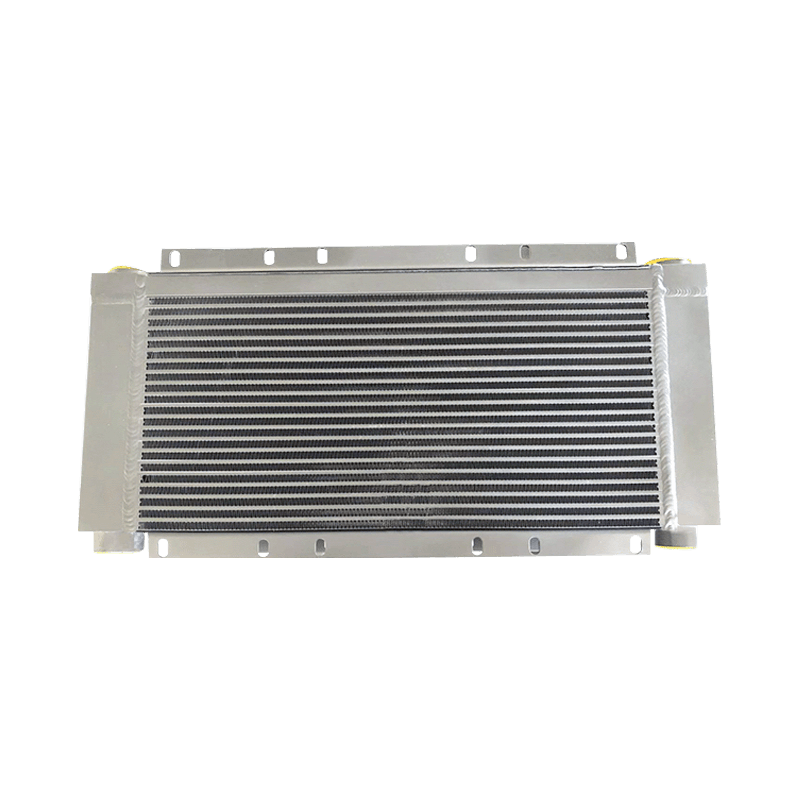 Wholesale Corrosion Resistance Aluminum Plate-fin Radiator Suppliers, Company - Wuxi Jinlianshun - China Wholesale Corrosion Resistance Aluminum Plate-fin Radiator Suppliers and Company, Custom Corrosion Resistance Al...View Product →
If you are evaluating part specifications for cooling equipment, the connection between flux choice and long-term corrosion resistance is direct. A part brazed with corrosive flux and incomplete cleaning can look perfect at delivery and fail six months later. For a more detailed look at material and process choices for corrosive environments, our practical corrosion resistance plate-fin radiator selection guide goes through the key parameters.
Once the corrosive/non-corrosive decision is made, flux selection becomes an engineering task of matching the flux window to the base metal, filler metal, and furnace atmosphere.
The flux must be fully active at the brazing temperature, and its effective range must overlap with the melting range of the filler metal. Common aluminum brazing fillers such as Al-Si alloys start melting around 575 degrees Celsius. The flux should melt and spread before the filler reaches full liquidity. If the flux activates too late, the filler will not wet; if it activates too early, the flux may dry out before the joint forms.
For non-corrosive potassium fluoroaluminate fluxes, the typical active range is roughly 560 to 620 degrees Celsius. That covers most aluminum brazing applications, but verify it against the specific alloy combination you are using.
Flux is often applied as a slurry, a paste, or a pre-coated layer. The powder particle size affects application uniformity and how the coating behaves during heating. Coarse powder is easier to handle but can sit unevenly; fine powder gives a more uniform coating but can be harder to mix and control. The carrier system matters too: water-based slurries need consistent drying, while solvent-based systems may need different handling. If you are brazing fin assemblies with narrow gaps, a uniform, thin flux layer is usually more important than maximum flux activity.
Non-corrosive flux works best in a dry inert atmosphere, typically nitrogen. The atmosphere must be dry to prevent oxide regrowth, and the dew point should normally be below minus 40 degrees Celsius. Oxygen and moisture levels in the furnace directly affect the flux efficiency. If the atmosphere is poor, the flux will consume itself fighting oxide instead of enabling the braze, leading to starved joints. Corrosive fluxes are more tolerant of atmosphere quality, which is one reason they remain in use for manual and torch brazing applications.
No flux should go into series production without a small batch trial that includes residue behavior testing. The chemical specification alone does not tell you how the flux will perform in your furnace, on your fin geometry, with your cleaning and assembly process.
Practical qualification steps include:
These steps might seem heavy for a consumable material, but flux is the main variable that can turn a good brazing process into a field reliability problem. For our own manufacturing, we treat flux qualification as part of the product design review, especially when the heat exchanger will be used in demanding applications such as hydraulic cooling or powertrain thermal management.
Flux selection is a reliability decision, not a consumable cost decision.
In aluminum brazing, the filler metal and furnace profile get most of the attention, but the flux determines whether the joint survives its first year of service. Non-corrosive fluoride flux eliminates the biggest risk: trapped residue that absorbs moisture and corrodes the joint from the inside. For heat exchanger cores and other closed structures, that makes it the correct default choice. When procuring flux, confirm the temperature window, the atmosphere requirements, and the residue behavior, then validate with a real production trial.
If you are designing or sourcing brazed aluminum cooling products, an aluminum plate-fin cooler built with a controlled non-corrosive flux process is the baseline to expect.
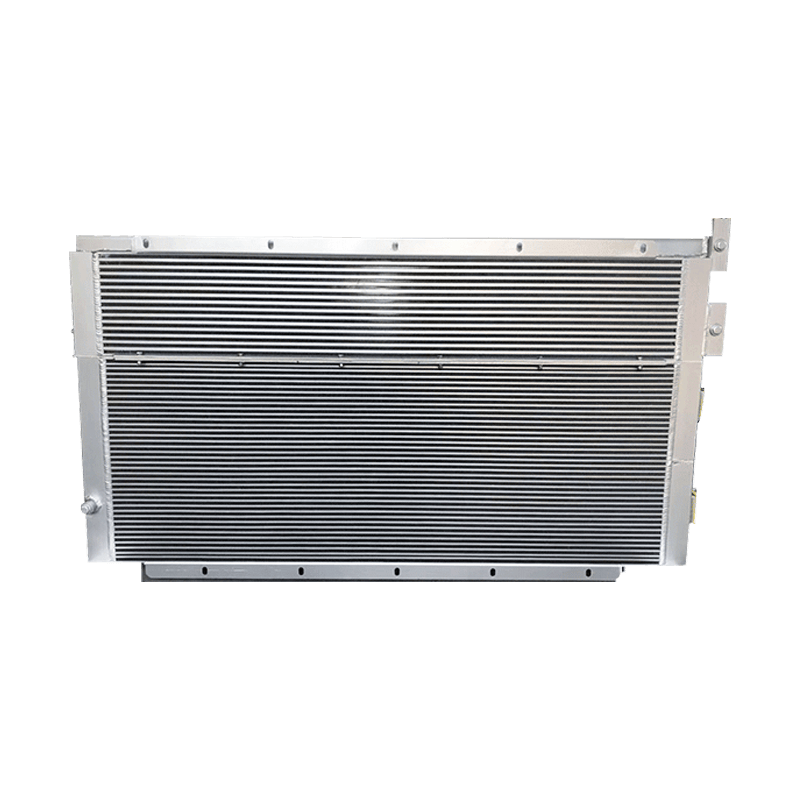 Aluminum Coolers Manufacturers, Aluminum Plate-fin Cooler SuppliersAs China Aluminum Coolers Manufacturers and Aluminum Plate-fin heat exchanger Suppliers, Factory, Jinlianshun offer Cutsom Aluminum Plate...View Product →
Technological innovation, quality refinement, integrity-based, the pursuit of excellence. Market-oriented, “customer satisfaction” as the core, all services to customers. Aluminum Heat Exchangers Manufacturers in China, Aluminum Radiator Heat Exchangers Solutions
ADD: No.59-1 Changkang Road, Wuxi Binhu District, Wuxi City, Jiangsu Province, China.
MP(Whatsapp):+86-18168358320
MP(Whatsapp):+86-18068169815
MP(Whatsapp):+86-18914157685
Copyright © Wuxi Jinlianshun Aluminum Co. Ltd. All Rights Reserved.

 English
 русский