 +86-18168358320
Welcome to Wuxi Jinlianshun Aluminum Co., Ltd Website! Aluminum Heat Exchangers Manufacturers

 2026.08.07
 Content
A concrete mixer truck works in a loop: it loads at the batching plant, travels to the site, and keeps the drum rotating so the mix does not set. The hydraulic system that powers that drum and the discharge chute also generates steady heat. If that heat is not removed, oil temperature rises, viscosity drops, seals soften, and the drum slowly loses torque. The result is a stopped truck at the wrong place and time. That is why the concrete mixer truck heat exchanger is one of the most carefully selected components in the cooling package.
After years of building aluminum plate-fin coolers for mobile machinery, our engineering view comes down to this: a correctly sized heat exchanger is the cheapest insurance against hydraulic failure on a mixer truck. Once the heat load is matched with a core that has enough frontal area and clean airflow, the rest is mostly maintenance discipline.
On a typical mixer truck, the drum is driven by a hydraulic pump connected to the engine power take-off. The pump sends oil to a hydraulic motor, and the motor turns the drum through a reducer. The same power pack also operates the discharge chute and sometimes the drum raising mechanism. Every pump inefficiency, every pressure drop in the valve block, and every line restriction converts into heat. In continuous summer operation, the hydraulic oil can climb well above 90°C without a cooler.
Most mixer trucks use an oil-to-air heat exchanger mounted on the side of the frame or ahead of the radiator. In this layout, hot oil flows through the cooler core while ambient air is pulled across the fins by a fan or by vehicle motion. Some installations instead use an oil-to-water cooler, with the engine coolant acting as the heat sink. Both approaches work, but the oil-to-air aluminum plate-fin version has become the standard for new vehicles and retrofit upgrades because it is lighter, easier to plumb, and requires no additional coolant connections.
For operators who need extra cooling reserve in very hot climates or on long uphill hauls, adding an auxiliary aluminum hydraulic system heat exchanger is a practical step. The dedicated concrete mixer truck heat exchanger itself is usually sized for the drum capacity and pump flow of the original vehicle.
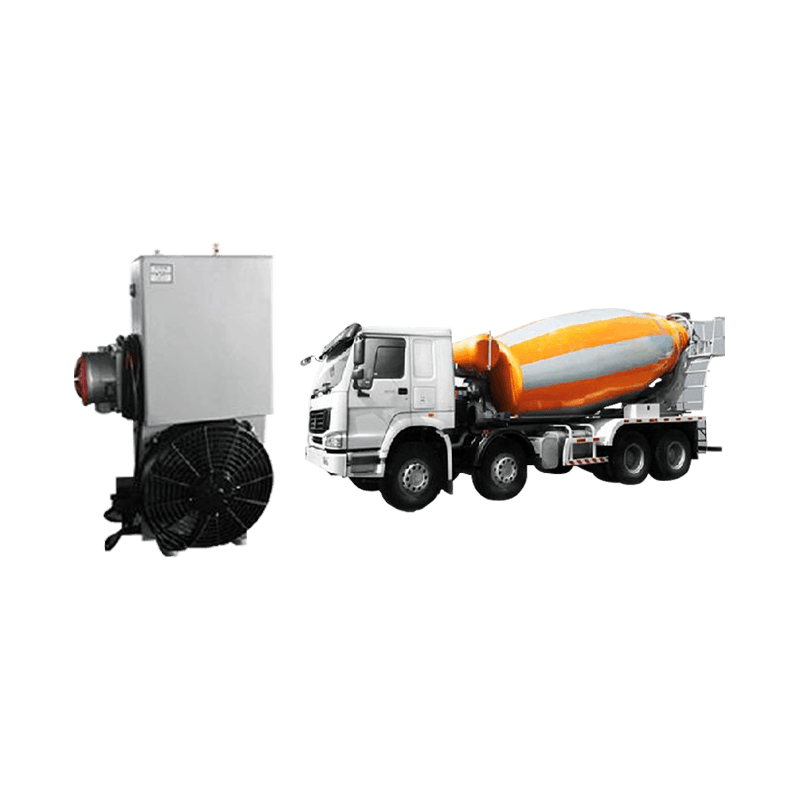 Wholesale Concrete Mixer Truck Heat Exchanger Suppliers, Company - Wuxi JinliansWuxi Jinlianshun - China Wholesale Concrete Mixer Truck Heat Exchanger Suppliers and Company, Custom Concrete Mixer Truck Heat Exchanger,...View Product →
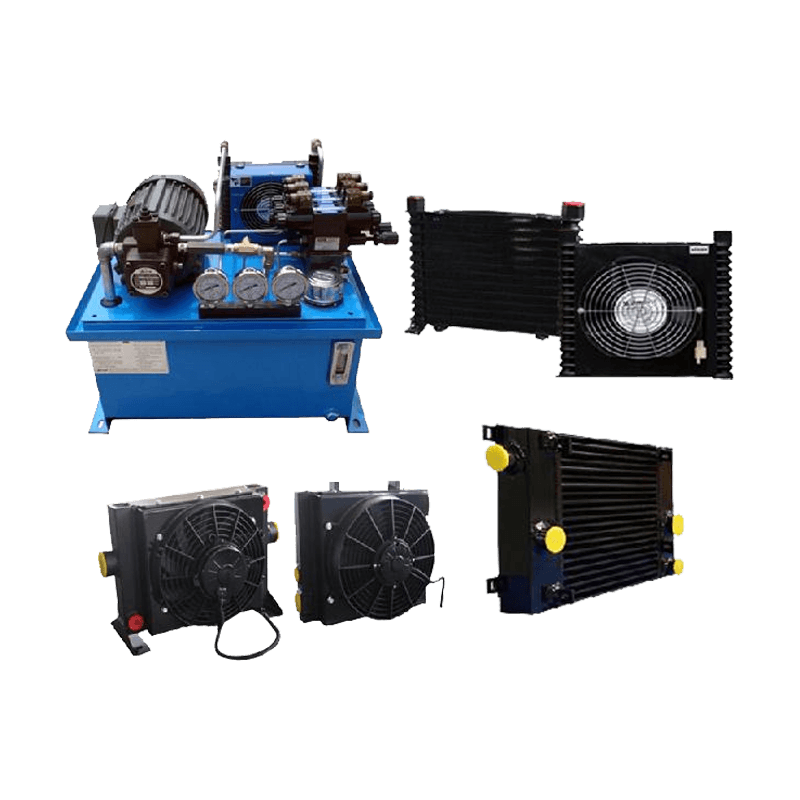 Wholesale Aluminum Hydraulic System Heat Exchanger Suppliers, Company - Wuxi JinWuxi Jinlianshun - China Wholesale Aluminum Hydraulic System Heat Exchanger Suppliers and Company, Custom Aluminum Hydraulic System Heat ...View Product →
Aluminum plate-fin cores are built by stacking flat separation plates with corrugated fins between them, then vacuum-brazing the entire stack into one rigid block. The fins multiply the surface area inside and outside the core, so a relatively small package can reject a large amount of heat. For a mixer truck chassis, where every kilogram affects payload and every centimeter competes with fuel tanks and exhaust components, this compactness is a decisive advantage.
| Evaluation criterion | Aluminum plate-fin | Traditional finned-tube |
|---|---|---|
| Weight per kW | Lower | Higher |
| Heat transfer density | Excellent | Moderate |
| Resistance to road vibration | Good (brazed core) | Mechanical joints can loosen |
| Corrosion behavior with aluminum tanks | Compatible | Requires careful material pairing |
| Custom port positions | Flexible | Possible but more complex |
| Maintenance burden | Lower | Higher due to fin damage and joint leaks |
The same aluminum plate-fin platform is used across our construction machinery range, so the core quality you get in a mixer truck cooler is identical to what goes into an aluminum plate-fin cooler for other heavy equipment. This common design philosophy also simplifies spare parts stocking for fleets that run different machines.
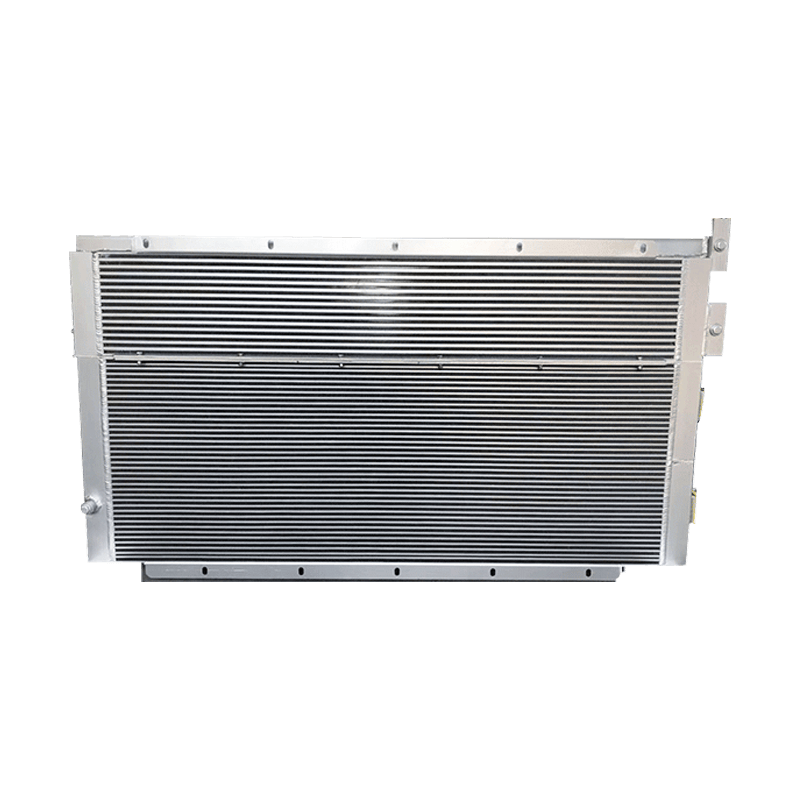 Aluminum Coolers Manufacturers, Aluminum Plate-fin Cooler SuppliersAs China Aluminum Coolers Manufacturers and Aluminum Plate-fin heat exchanger Suppliers, Factory, Jinlianshun offer Cutsom Aluminum Plate...View Product →
Sizing a heat exchanger is not a matter of copying the old unit. The correct starting point is the heat load generated by the hydraulic system. For a hydrostatic drum drive, a useful rule of thumb is that 20–30% of the pump input power ends up as heat in the oil. A 12 m³ mixer with a 45 kW hydraulic pump can therefore need 9–14 kW of cooling capacity just for the drum circuit, plus margin for the PTO and charge pumps.
| Parameter | Typical range / value |
|---|---|
| Drum capacity | 6 m³ to 16 m³ |
| Hydraulic oil flow | 40–160 L/min dependent on pump size |
| Required heat rejection | 8–25 kW for normal duty |
| Maximum pressure drop | 0.5–1.0 bar across the oil side |
| Target oil temperature | 55–70°C continuous; stay below 80°C |
| Design ambient air | 38–50°C depending on market |
| Mounting space | Frame rail, behind grille, or remote bracket |
Once the heat load and allowed pressure drop are known, the core size can be estimated. Frontal area matters more than oil-side volume: the cooler must be large enough to pass air without excessive resistance. A core that is too small will create high oil pressure and still run hot; a core that is oversized adds weight and cost without improving reliability. This is where experience with actual mixer layouts makes a difference.
Mixer truck coolers do not usually fail suddenly. They fail gradually, through blocked airflow, worn fans, contaminated oil, and corroded fins. The early symptoms are subtle: the drum rotates more slowly at idle, the hydraulic system makes more noise, or the oil temperature gauge reads progressively higher by the end of the shift.
Cement dust, mud and road grime can plug the fins within a few weeks on a busy mixer. The most effective maintenance is a weekly wash of the core with low-pressure water, directing the spray from the clean side to the dirty side. Compressed air also works, but be careful not to bend the fins with a high-pressure nozzle.
If the cooler is fan-assisted, a cracked blade or a missing shroud can reduce airflow by half. Check the fan clutch or electric motor, and make sure the shroud still seals against the core. A small gap can recycle hot air instead of drawing cool outside air.
Overheated hydraulic oil forms varnish and sludge. This deposit coats the inside of the cooler and increases pressure drop. A differential pressure gauge across the cooler is a good indicator: if the pressure drop climbs while the flow stays the same, the oil passages are fouling. At that point, professional cleaning or replacement is the safest option. For a deeper look at symptoms and testing, our article on diagnosing hydraulic system heat exchanger failures walks through the same logic in more detail.
Mixer trucks are rarely identical, even when the drum capacity is the same. Frame widths, hose routing, port sizes and available cabinet space all vary between chassis manufacturers. A true bolt-on replacement must match not only the mounting hole pattern but also the orientation of the oil ports and the overall envelope. That is why most serious suppliers treat a mixer truck heat exchanger as a custom-engineered component rather than an off-the-shelf radiator.
When evaluating a supplier, ask about the brazing process, fin density, alloy grade and pressure-test procedure. A vacuum-brazed aluminum core should be leak-tested at its rated pressure and flow condition before dispatch. At Wuxi Jinlianshun Aluminum, the same aluminum plate-fin line that produces coolers for excavators, loaders and cranes also produces the mixer truck cooler in a range of core depths and port positions. If your hydraulic system has been upgraded or the original cooler no longer keeps oil temperature within limits, a custom core is often the shortest route back to reliable operation.
For buyers who want to compare material options before committing, the comparison of aluminum vs copper heat exchangers in construction machinery covers cost, weight and durability trade-offs in detail.
The final word is consistent with the opening one: size the cooler from the heat load, keep the airflow path clean, and choose a core that is built to survive vibration and dust. A well-specified concrete mixer truck heat exchanger will hold hydraulic oil in the safe temperature range even on a 40°C day, protect pumps and motors from accelerated wear, and give the fleet manager one less reason to worry about a stopped truck at the job site.
Technological innovation, quality refinement, integrity-based, the pursuit of excellence. Market-oriented, “customer satisfaction” as the core, all services to customers. Aluminum Heat Exchangers Manufacturers in China, Aluminum Radiator Heat Exchangers Solutions
ADD: No.59-1 Changkang Road, Wuxi Binhu District, Wuxi City, Jiangsu Province, China.
MP(Whatsapp):+86-18168358320
MP(Whatsapp):+86-18068169815
MP(Whatsapp):+86-18914157685
Copyright © Wuxi Jinlianshun Aluminum Co. Ltd. All Rights Reserved.

 English
 русский